Wondering whether a condo or townhome in Lone Tree will actually make life easier? That is a smart question, because attached housing can offer less day-to-day upkeep, but the details matter more than the label on the listing. If you are trying to balance commute convenience, maintenance, amenities, and monthly costs, this guide will help you understand what to look for before you buy. Let’s dive in.
Why attached living fits Lone Tree
Lone Tree is a compact city with strong transportation access and a growing mix of residential, retail, and recreation options. The city has five RTD light rail stations, a free Link on Demand shuttle, and easy access to I-25, C-470, and E-470. That setup makes condos and townhomes especially appealing if you want to simplify your routine and stay connected to daily conveniences.
The city is also planning for a denser, more walkable future. Its City Center vision emphasizes transit access, bikeways, mixed-use development, and thousands of planned residential units in an urban-style core. If you like the idea of living near services, trails, and transportation without taking on full detached-home maintenance, attached housing can be a natural fit.
Lone Tree also offers a strong public amenity base. According to the city’s recreation resources, residents have access to the Lone Tree Recreation Center, library branch, tennis center, golf club, and trail-based recreation connected to Rueter-Hess Reservoir. In many condo and townhome communities, HOA amenities are an added layer on top of what the city already provides.
Condo vs townhome basics
A condo usually means you own your individual unit and share ownership of common areas through the homeowners association. According to Freddie Mac and Fannie Mae guidance, condo fees often help cover exterior maintenance, common-area upkeep, insurance on shared areas, and reserve funds for future repairs. Condos can be found in several formats, including mid-rise, garden-style, and even multistory townhome-style buildings.
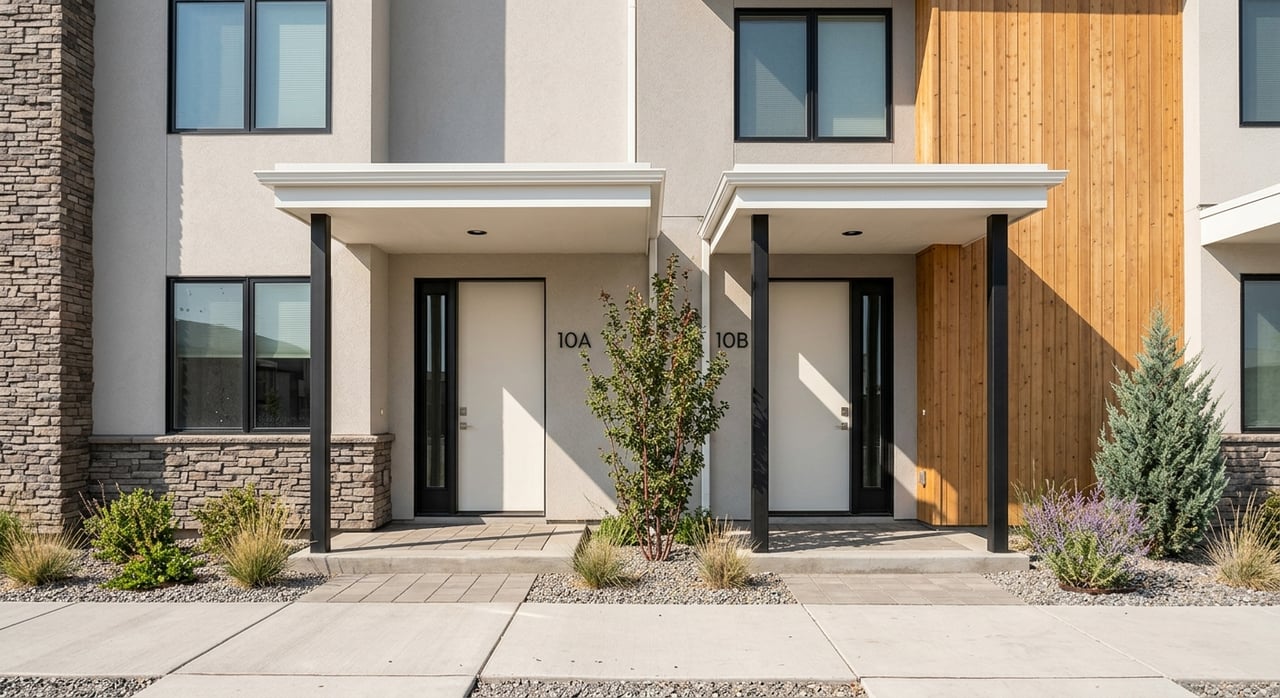
A townhome usually feels more like a traditional house from the outside. These homes are commonly attached side by side, often with their own exterior entrances and shared walls. But here is the key point: some townhome-style homes are legally structured as condos, so the appearance alone does not tell you how ownership and maintenance work.
Why legal structure matters most
When you compare homes in Lone Tree, the biggest difference is often not the floor plan. It is the property’s legal setup and the community documents that define ownership, maintenance, and insurance responsibilities. The declaration and CC&Rs are what tell you who is responsible for roofs, siding, windows, decks, exterior walls, and common spaces.
That matters because two homes that look similar can come with very different obligations. In one community, the HOA may handle most exterior maintenance. In another, you may own and maintain more than you expected.
Questions to ask before you buy
- Do you own only the interior of the unit, or the land and exterior too?
- Who maintains the roof, siding, windows, decks, and exterior walls?
- Is parking assigned, deeded, or first come, first served?
- Is outdoor space private, limited common element, or shared common area?
What low-maintenance really means
Many buyers choose condos and townhomes because they want less yard work and fewer exterior chores. That can absolutely be true, but “low maintenance” does not mean “no responsibility.” In attached communities, responsibility is often shared between you and the HOA, and the split can vary from one property to the next.
In Colorado HOA communities, the association generally collects dues, enforces rules, and maintains common areas and elements. Post-1992 common-interest communities are generally required to carry property insurance on common elements and liability insurance tied to those common elements. That framework can reduce your direct involvement in certain repairs, but you still need to understand exactly what is covered.
Common items HOA dues may cover
Based on Fannie Mae’s condo buying guidance, dues may help pay for:
- Exterior repairs
- Common-area maintenance
- Water
- Sewer
- Trash
- Recreational amenities
- Reserve funding for major future expenses
Some communities cover more. Some cover less. The monthly number alone does not tell you whether the dues are a good value.
Understand insurance before closing
Insurance is one of the most overlooked parts of condo and townhome buying. In many attached communities, the HOA’s master policy covers common elements and certain shared structures, but that does not mean it covers everything inside your home. You may still need interior coverage and possibly additional protection depending on the governing documents and the property’s risk profile.
This matters in Colorado, where attached-unit communities commonly deal with HOA insurance claims after hail and other damage. Before you close, review the master insurance policy, ask what it covers, and confirm where the HOA’s responsibility ends and yours begins. That step can save you from expensive surprises later.
Look past the monthly HOA fee
A low HOA fee can look great at first glance. But if the association is underfunded, that lower fee may not be a bargain. HOA dues vary based on location, property age, condition, value, and amenities, and part of those dues should support reserves for major repairs.
Colorado guidance also notes that special assessments can be used for major repairs, unexpected expenses, new construction, or reserve shortfalls. That is why it is important to review the budget, reserve information, and meeting minutes instead of focusing only on the monthly dues. Colorado now also requires mandatory reserve studies for common-interest communities with major shared components, which can give you a better sense of whether the HOA is planning ahead.
Smart HOA documents to review
- Current budget
- Reserve study or reserve information
- Recent meeting minutes
- Master insurance summary
- Declaration and CC&Rs
- Any notice of pending or recent special assessments
Amenities are only part of the story
Pools, gyms, clubhouses, and landscaped grounds can make condo or townhome living more enjoyable. But amenities are only as strong as the association managing them. Financial health, maintenance planning, and rule enforcement all affect your day-to-day experience.
Colorado’s HOA guidance notes that delinquency can lead to late fees, liens, attorney’s fees, and even loss of access to amenities in some cases. For a buyer, the bigger takeaway is simple: amenities add value, but they should never distract you from reviewing the HOA’s financial and operational health.
Which option may fit your lifestyle
The best choice depends on how you live, not just what a floor plan looks like online. In Lone Tree, attached housing can work well for several types of buyers because the city combines transportation access, recreation, and convenient services in a relatively compact area.
Condos for convenience
If you want a simpler routine, condo living may be attractive. Lone Tree’s transit access, free shuttle service, and connections to retail and employment centers support a lock-and-leave lifestyle. That can be especially useful if you spend more time commuting, traveling, or enjoying local amenities than handling exterior upkeep.
Townhomes for a house-like feel
Townhomes often appeal to buyers who want attached living with a little more separation and a more traditional layout. They can offer a middle ground between a condo and a detached house. In Lone Tree, that can be a practical choice if you want proximity to trails, parks, and transit without taking on full single-family maintenance.
Low-maintenance options for downsizers
Lone Tree has a notable share of residents age 65 and older, and the city’s recreation and library resources can complement a lower-maintenance homeownership setup. If you want to spend less time coordinating exterior work and more time on hobbies, travel, or community activities, condos and townhomes may deserve a closer look.
A practical Lone Tree buying checklist
Before you move forward on a condo or townhome, make sure you can clearly answer these questions:
- What do the HOA dues include?
- Who handles roofs, siding, windows, and decks?
- What does the master insurance policy cover?
- Are there recent or pending special assessments?
- How healthy are the reserves?
- Does the board or management company appear organized and responsive?
- How are parking and outdoor spaces assigned?
If you can answer those questions with confidence, you are in a much better position to judge whether the home will truly support the lifestyle you want.
The bottom line on Lone Tree condos and townhomes
Condo and townhome living in Lone Tree can be a smart move if you want convenience, access to amenities, and less hands-on upkeep. But the real decision is not just about the style of home. It is about ownership structure, HOA responsibilities, insurance, reserve planning, and how the community is managed.
That is where having one accountable point of contact can make the process easier. If you want help comparing attached homes, reviewing how monthly costs fit your financing plan, or understanding what to flag in HOA documents, connect with UGotAGuy for a straightforward conversation.
FAQs
What is the difference between a condo and a townhome in Lone Tree?
- A condo usually means you own the unit itself and share common areas through the HOA, while a townhome often has a more house-like layout with side-by-side units. In Lone Tree, the legal documents matter more than the appearance because some townhome-style homes are structured as condo projects.
What do HOA fees usually cover for Lone Tree condos and townhomes?
- HOA fees may cover items like exterior maintenance, common-area upkeep, water, sewer, trash, insurance on common areas, amenities, and reserve funding, but coverage varies by community.
What HOA documents should you review before buying a Lone Tree condo or townhome?
- You should review the declaration, CC&Rs, budget, reserve information, meeting minutes, master insurance summary, and any notices of recent or pending special assessments.
Is condo or townhome living in Lone Tree good for commuters?
- It can be a practical option for commuters because Lone Tree offers five RTD light rail stations, a free Link on Demand shuttle, and convenient access to I-25, C-470, and E-470.
Do Lone Tree condo and townhome buyers still need their own insurance?
- Yes. Even if the HOA carries a master policy for common elements, you may still need interior coverage and possibly additional insurance depending on the community documents and coverage limits.