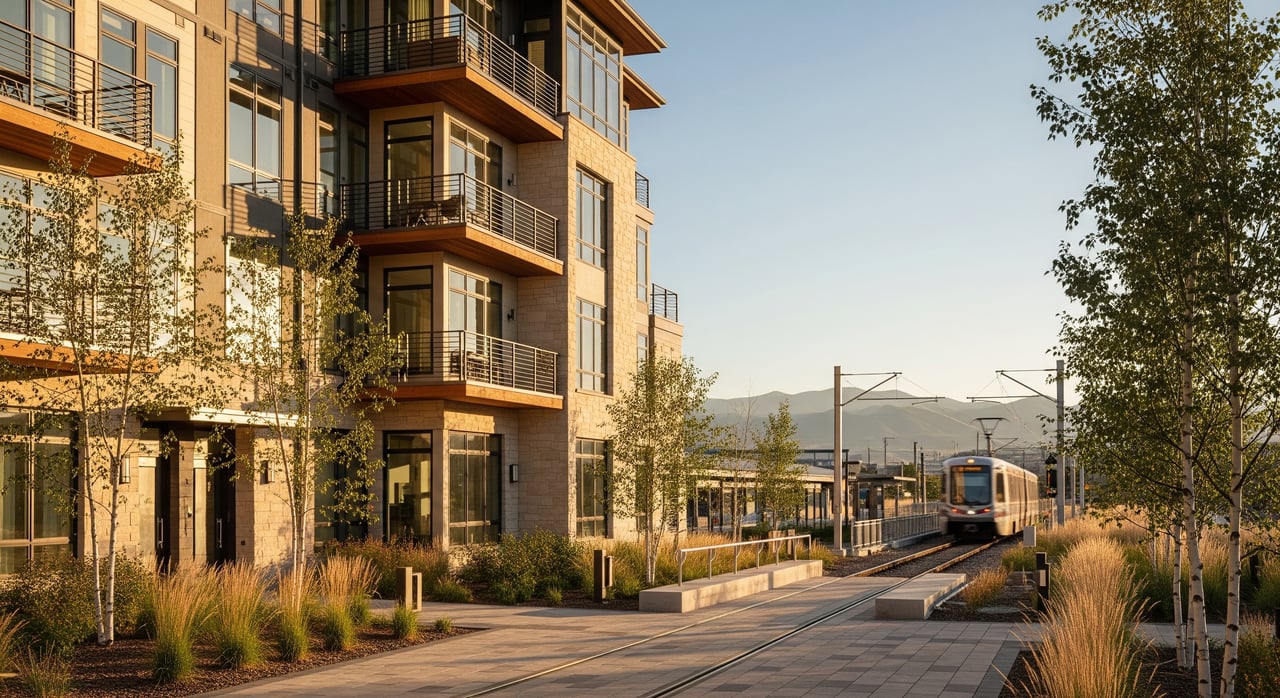
Thinking about picking up a rental in Aurora that stays filled and close to transit? Condos and townhomes near RTD light rail and commuter rail stations can offer steady demand, simple maintenance, and access that renters value. If you want a practical roadmap before you write an offer, you’re in the right place. You’ll learn how to evaluate rentability near stations, what to watch in HOA documents, how to structure financing, and how to find solid listings fast. Let’s dive in.
Why invest near Aurora light rail
Transit-driven demand
When you buy within walking distance of a station, you tap into a renter pool that values reliable transit and shorter commutes to Denver and the airport. Studies often tie transit proximity to higher rents and stronger demand within walking distance. Over time, as transit use grows and development clusters around stations, values can benefit.
Who rents condos and townhomes
Near stations, you tend to see commuters, healthcare and service workers with shift schedules, and young professionals who prefer a low-maintenance lifestyle. Townhomes often attract small households that stay longer. Condos typically appeal to singles and couples who want convenience and can be more flexible on lease length.
Rent premiums and amenities
Renters will pay more for features that make daily life easier. In-unit laundry, assigned or covered parking, updated kitchens and baths, secure access, and pet-friendly rules can lift demand. If the station is within a half-mile, you strengthen your odds of lower vacancy and better rent per square foot.
Top factors that drive rentability
Walkability and parking
Distance to the platform matters. A 0 to 0.5 mile walk performs better than 1 mile or more. In the Aurora suburbs, assigned parking is still important. Covered or secured parking is a plus.
Employment anchors and turnover
Access to key job centers like the Aurora Health Campus and the airport helps stabilize demand. Buildings right by stations can have higher turnover, but that does not always mean higher long-term vacancy. Plan for normal turnover in your numbers and keep units clean, safe, and functional.
Rent comps and vacancy checks
Use hyperlocal comps. Match property type, bedroom and bath count, and stick to the same building or within a half-mile. Check what amenities those comps include. If nearby new buildings add a lot of supply, be conservative on rent growth.
HOA due diligence for condos and townhomes
Must-have documents
Before you commit, collect and read:
- CC&Rs, bylaws, and rules and regulations.
- The current budget and 12 to 24 months of financials.
- The reserve study. This helps you forecast future assessments.
- Meeting minutes for the last 6 to 12 months.
- Owner-occupancy and rental percentages; check for rental caps and minimum lease terms.
- Insurance information, including the master policy and deductible.
- Any litigation disclosures.
Common investor pitfalls
- Rental limits or minimum lease terms can block your plan to rent or house-hack.
- Low reserves and large capital needs can trigger special assessments that crush cash flow.
- High dues change the math fast. Compare HOA to expected rent. If dues push past 20 to 30 percent of gross rent, be cautious.
- Pet and storage rules can shrink your tenant pool. Confirm assigned parking and guest parking.
Rules that affect house-hacking
Some HOAs require a set period of owner occupancy before you can rent your unit. Others cap the share of rentals in the community. These rules tie directly to your exit options and your ability to cash flow later. Read every line and confirm with the HOA in writing.
Financing paths for small investors
Your loan options
- Conventional loans: Common for investment condos and townhomes. Expect higher down payments, often 15 to 25 percent for investors.
- FHA loans: Low down payment for owner-occupants. The condo project must meet FHA approval or pass a unit or project review. You must live in the home to use FHA.
- VA loans: Similar occupant rules and potential project underwriting.
- Portfolio or local credit unions: More flexible on project approval, often at higher rates or with unique terms.
- Non-QM and private lending: Useful for nonstandard income or speed, with a higher cost of capital.
Condo project approval hurdles
Many lenders require a condo project review. They look at owner-occupancy, reserves, and delinquencies. If the project does not meet guidelines, your loan may need a different route with different pricing. Single-unit approvals are possible but can add time and documentation.
House-hacking checklist
- Confirm HOA rental rules and any owner-occupancy periods.
- Verify the project’s status for FHA or conventional condo approval if you plan to use those loans.
- Compare owner-occupant rates and mortgage insurance to investor terms. The difference can be significant.
- Discuss insurance. Owner-occupied landlord coverage and the HOA master policy should work together without gaps.
Sample deal analysis near a station
Here is a hypothetical example to show the process. Replace each input with current comps, HOA figures, taxes, and lender quotes when you evaluate a real property.
Property: 2-bed, 1.5-bath condo, 850 sq ft, about 0.4 mile from a light-rail station. Purchase price: $300,000.
Basic inputs (hypothetical):
- Down payment: 20 percent = $60,000
- Loan: $240,000 at 6.5 percent, 30-year fixed → monthly principal and interest ≈ $1,516
- Property tax: about 0.8 percent of price per year = $2,400 → about $200 per month
- HOA dues: $350 per month
- Insurance: $60 per month
- Property management: 8 percent of rent
- Market rent: $1,800 per month
- Vacancy: 7 percent of rent
- Maintenance/CapEx reserve: $150 per month
Now run the numbers:
Gross Scheduled Income = $1,800 × 12 = $21,600
Effective Gross Income = $21,600 × 0.93 = $20,088
Operating expenses (annual):
- HOA = $350 × 12 = $4,200
- Taxes = $2,400
- Insurance = $720
- Management = 8 percent × $21,600 = $1,728
- Maintenance/CapEx = $150 × 12 = $1,800
- Total operating expenses = $11,848
Net Operating Income = $20,088 − $11,848 = $8,240
Annual debt service = $1,516 × 12 = $18,192
Cash flow before tax = $8,240 − $18,192 = −$9,952
Cap rate = $8,240 ÷ $300,000 = 2.75 percent
Cash-on-cash return = −$9,952 ÷ $60,000 = −16.6 percent
Interpretation: With these inputs, cash flow is negative. That tells you the most important levers: purchase price, HOA dues, rent, and financing terms.
Ways to improve returns:
- Increase rent if comps support it. If rent were $2,100, run the same math again and compare.
- Negotiate price or ask for seller credits to lower your cash outlay and rate buydown.
- Target buildings with lower HOA dues or stronger reserves that reduce assessment risk.
- Consider an owner-occupied plan if it fits your goals, then revisit loan options.
Red flags to watch:
- High HOA dues as a share of rent.
- Thin HOA reserves or pending major projects.
- Rental caps or strict lease terms that limit flexibility.
- Project approval issues that block your preferred loan.
- New nearby supply that limits rent growth.
How to find listings near RTD stations
Use these steps to build a strong search without relying on static links.
Step 1: Map the stations
List the Aurora and Arapahoe County stations that match your commute goals. For walkable units, set a radius of 0.25 to 0.75 mile. For a short bike or drive, use up to 1 mile.
Step 2: Use the right search tools
- Ask your agent for an MLS radius search around your target stations. Filter for condos and townhomes by price, beds, baths, HOA, and parking.
- If you browse public portals, use the map-draw tools and keywords like the station name or “near light rail.” Double check HOA dues.
Step 3: Screen listings for investor fit
- Request HOA documents early. Look for rental rules, owner-occupancy, and reserves.
- Pull rent comps within about a half-mile with matching bed and bath counts.
- If you need FHA or conventional condo approval, confirm project status with your lender.
Step 4: Check walkability and access
Measure actual walking time and the route. Note sidewalk quality, crossings, and lighting. Confirm assigned or covered parking and guest parking.
Step 5: Engage local pros
- A local agent who knows station-area HOAs can save you time and risk.
- A local mortgage pro who understands condo project reviews can keep your loan on track.
- If covenants are unclear, consider a quick review with a real estate attorney.
Practical due-diligence checklist
- Pull the HOA budget, financials, and reserve study.
- Read CC&Rs for rental caps, lease terms, pets, and parking.
- Review meeting minutes for planned projects or assessments.
- Confirm condo project approval status for your loan type.
- Run rent comps and get a property manager or leasing pro’s opinion.
- Build a conservative pro forma and stress-test for lower rent and higher vacancy.
- Verify assigned parking and storage.
- Inspect the unit for near-term repairs that could hit your CapEx.
- Confirm property taxes and any special district assessments.
How UGotAGuy helps you execute
You want one accountable partner who can move from search to close without stalls. With UGotAGuy, you get coordinated brokerage, direct loan origination through JFR Home Loans, and contractor support for quick fixes. That saves time and reduces surprise costs. You focus on selecting the right unit. We handle the logistics.
Ready to explore condos and townhomes near Aurora’s light rail stops, run the numbers, and structure financing that fits your plan? Connect with UGotAGuy to schedule a consultation.
FAQs
Can I use FHA to buy a condo near Aurora light rail?
- Yes, if you will live in the unit and the condo project meets FHA approval or passes a unit or project review. Confirm status early with your lender and review HOA rules.
How much do HOA dues matter for investment condos?
- A lot. High dues can erase cash flow. Compare total monthly costs, including mortgage, taxes, HOA, and insurance, against realistic rent in the same building or block.
Do Aurora HOAs usually allow rentals near stations?
- Policies vary by community. Some allow unrestricted rentals, while others have caps or minimum lease terms. Read the CC&Rs and verify current rental percentages.
Are townhomes better than condos for long-term renters?
- It depends on the layout and HOA rules. Townhomes often attract longer stays from small households, while condos can appeal to singles or couples who value convenience.
Is being within a half-mile of a station always best for rentability?
- Usually. Walkable distance tends to improve demand, but watch for noise, parking pressure, or block-by-block conditions. Visit at different times of day to evaluate.
What if a condo project is not approved for my loan type?
- You can consider a different loan, such as a portfolio option, or shift focus to a project that meets approval guidelines. Ask your lender for a quick project review.
What numbers should I stress-test before buying?
- Test a 10 to 20 percent rent drop, a vacancy of 60 to 90 days, and a potential special assessment. If the deal survives those hits, it is much more durable.